GreenPlus Medical
Choosing the right insulin pen needles is crucial for effective diabetes management. In recent reports, 62% of diabetic patients prefer insulin pens due to their ease of use. The growing market demands higher quality and safety standards. At the 2026 Canton Fair, this will be evident. Advanced manufacturing techniques will ensure needle precision and comfort.
AI enhancements at the fair will allow buyers to find suppliers meeting ISO and CE certifications efficiently. This technology can improve sourcing, making it easier to navigate through the 1.55 million square meters of the exhibition space. It's important to recognize that not all suppliers guarantee the quality needed for insulin pen needles. As the market expands, improper choices could compromise patient safety, leading to health issues.
As medical professionals stress safe injection practices, buyers must prioritize quality. The landscape of diabetes care is evolving, yet not all products meet rigorous standards. Failing to evaluate these factors can have serious consequences. Attending the Canton Fair, one should remain vigilant and evidence-driven while selecting insulin pen needles to ensure patient wellbeing.
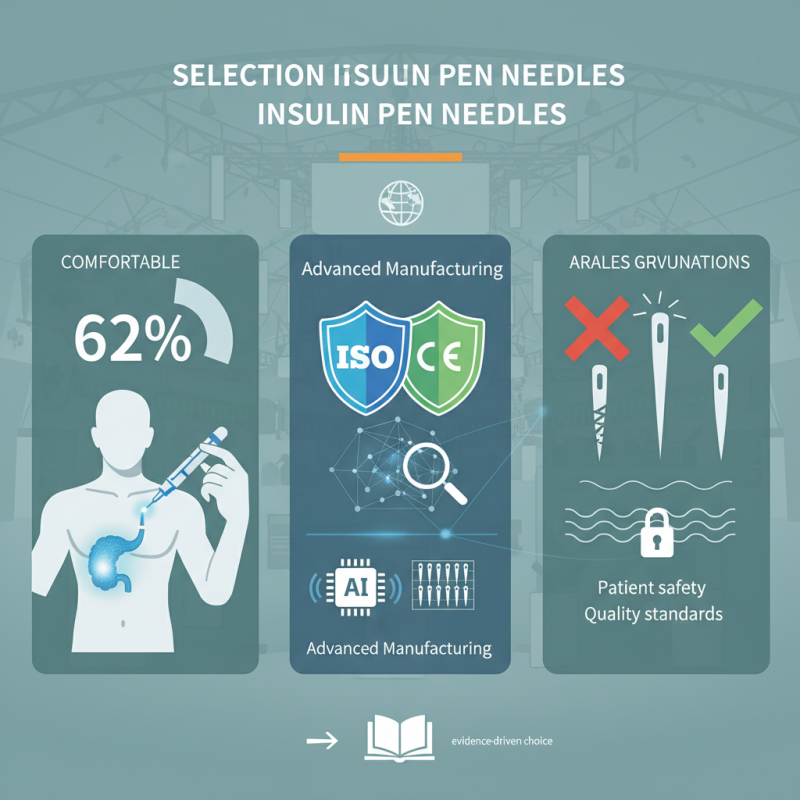
When selecting insulin pen needles at the Canton Fair, it is crucial to understand the various options available. A recent industry report indicated that approximately 50% of insulin users prefer finer needles. These needles, typically 4mm or 5mm, reduce discomfort during injections. A significant percentage of patients reported a more positive experience with these shorter needles.
Different gauges of needles play a vital role as well. A thinner gauge means a larger diameter. According to recent data, 31% of users felt that a 32-gauge needle offered the best balance between comfort and efficacy. However, many often overlook the importance of needle length and gauge when making their choice. Some industry experts suggest that patients could benefit from higher awareness of how these factors influence injection pain and insulin absorption.
Color coding is also essential in needle selection. Many manufacturers utilize colors to signify needle size. This system can be confusing for new users. Controlling the injection experience is key. Patients should seek needles that align with their comfort needs while considering factors like insulin type and injection frequency. Ultimately, making an informed choice at the Canton Fair can greatly enhance the daily experience of insulin users.
When selecting insulin pen needles, several key factors stand out. The needle gauge and length are critical for comfort and efficacy. Studies indicate that thinner needles (higher gauge) cause less pain. For example, a 32-gauge needle is often preferred for its balance between comfort and delivery precision. Length matters too. A 4mm needle can significantly reduce discomfort compared to longer options.
The materials used in needle design also play an essential role. Quality coatings can enhance the gliding experience and reduce friction. Reports show that needles with silicone coatings decrease the risk of skin damage during injection. Moreover, newer technologies focus on safety features. Some innovations include retractable designs to prevent needle stick injuries.
User experience is an essential factor to consider. Research highlights that individuals may have different preferences based on their pain tolerance. Some users report discomfort even with standard needles. This variability means that choice is subjective and personal. It's crucial to find a needle that aligns with individual needs, whether that’s comfort or ease of use. Making an informed choice is important, but personal experience should guide the final decision.
Choosing the right insulin pen needles can significantly impact comfort and efficacy. When evaluating needle size, consider length and gauge.
Needle length typically ranges from 4mm to 12mm. For most adults, a 4mm or 6mm needle is often sufficient. It might seem simple, but many overlook this detail. The wrong size can cause discomfort or affect insulin absorption.
Gauge is equally important. A higher gauge means a thinner needle. Needles come in various gauges, usually from 28 to 32. Thinner needles often cause less pain. However, some people report that thinner needles may bend more easily. This point can spark a debate about optimal choices.
Trial and error may be needed. Some prefer thicker needles for easier handling. Others value comfort above all. Always consult with healthcare professionals. Their guidance can help navigate this nuanced decision-making process. Choosing the right needle is more than just a preference; it’s crucial for effective diabetes management.
Choosing the right insulin pen needles can significantly impact diabetes management. At the Canton Fair 2026, you will find various brands. It's crucial to compare their quality, needle size, and user preferences. Studies show that using the right needle size can reduce pain during injections. Around 70% of patients report less discomfort when using shorter needles. This statistic highlights the importance of choice in needle length.
Evaluating brand options involves considering many factors. Materials used in production matter significantly. High-quality needles minimize tissue trauma and enhance medication delivery efficiency. However, not all brands prioritize these aspects. Some cost-effective options may compromise user experience. A recent report suggested that 65% of users moved to premium brands after initial dissatisfaction. Such data reinforces the need for careful evaluation.
Furthermore, packaging and ease of use are often overlooked. A pen needle that is difficult to attach can discourage consistent usage. Reports indicate that ease of use directly correlates with adherence rates. Patients who find their needles user-friendly tend to have better compliance. Identifying these features at the Canton Fair can help refine your choices.
| Feature | Needle Gauge | Length (mm) | Injection Comfort | Price Range (USD) |
|---|---|---|---|---|
| Standard Needle | 30 | 6 | Good | 10-15 |
| Comfort Needle | 32 | 4 | Very Good | 12-18 |
| Ultra-Thin Needle | 34 | 5 | Excellent | 15-20 |
| Safety Needle | 30 | 8 | Good | 14-19 |
| Pediatric Needle | 30 | 6 | Good | 8-13 |
Finding reliable suppliers at trade fairs can be challenging. At the Canton Fair 2026, the first step is to research potential suppliers. Look for those with a strong background in the medical industry. Check their certifications and product quality. These aspects are crucial for insulin pen needles.
During the fair, engage with suppliers directly. Ask questions about their manufacturing processes. Observe their booth and their interactions with other visitors. It reflects their business ethics and customer service. Take notes on their responses and compare them later.
Also, consider visiting their manufacturing sites if possible. This helps confirm their production capabilities. Building a relationship with suppliers is essential. However, be cautious. Not every supplier is as trustworthy as they claim. It’s okay to feel uncertain. Reflecting on your experiences will guide you in making informed decisions.
: Focus on needle gauge and length for comfort and efficacy. Thinner needles often cause less pain.
Higher gauge needles, like a 32-gauge, are usually preferred for their balance between comfort and delivery precision.
A shorter needle, such as a 4mm, can significantly reduce discomfort during injection compared to longer options.
Quality coatings can enhance the injection experience. Silicone coatings can reduce friction and skin damage.
Yes, some needles have retractable designs to prevent needle stick injuries, improving user safety.
Individual pain tolerance varies. Some users may feel discomfort even with standard needles, making personal preference key.
Studies show 70% of patients report less pain with shorter needles, highlighting the importance of choosing the right size.
Consider materials, packaging, and ease of use. Difficult-to-use needles can lower adherence rates to medication.
A report indicates that 65% of users shift to premium brands after dissatisfaction with initial options, often due to quality issues.
Make comparisons at events like the Canton Fair. Evaluate user experiences and preferences alongside needle specifications.
When navigating the options for Insulin Pen Needles at the Canton Fair 2026, it is crucial to understand the different types available. This includes familiarizing oneself with various needle sizes and gauges, as these factors significantly impact comfort and efficacy for users. Key considerations when selecting insulin pen needles also encompass evaluating personal preferences and any specific medical needs.
Additionally, comparing brand options can provide insights into quality and performance, which is essential for making informed choices. To ensure reliable sourcing, it’s advisable to seek out suppliers with a solid reputation during trade fairs. By focusing on these aspects, attendees can effectively select the best insulin pen needles that cater to their individual requirements.
