GreenPlus Medical GreenPlus Medical

Why Are PVC Free Medical Tubes the New Industry Standard?

Time:2026-09-26 Author:Liam
0%

Why Are PVC-free medical tubes becoming the industry standard? The shift reflects closer attention to material chemistry, patient contact, and product performance. PVC tubing can contain plasticizers to achieve flexibility. Some buyers now prefer alternatives that avoid particular additives, especially in applications involving sensitive patients or prolonged contact. Yet “PVC-free” does not automatically mean safer. Every material still needs testing.

Dr. Graham Peaslee, a researcher who studies chemicals in plastics, offers a useful principle—paraphrased here: “Test the material, not just its label.” That distinction matters. A tube must remain flexible after sterilization, resist kinking beside a hospital bed, and deliver fluids at a predictable rate. Medical-grade silicone, polyurethane, and polyolefin blends may meet different needs, but none is a universal replacement. Engineers compare extractables, leachables, durability, compatibility, and cost before selecting a formulation.

The industry standard is changing, not settled. Procurement teams may favor PVC-free options, while clinicians still need reliable handling and consistent supply. A clear material specification helps connect those priorities. So does evidence from tests on the finished tube, rather than assumptions based on its name. The practical question is not simply whether a tube contains PVC. It is whether its complete design performs safely and consistently for its intended use.
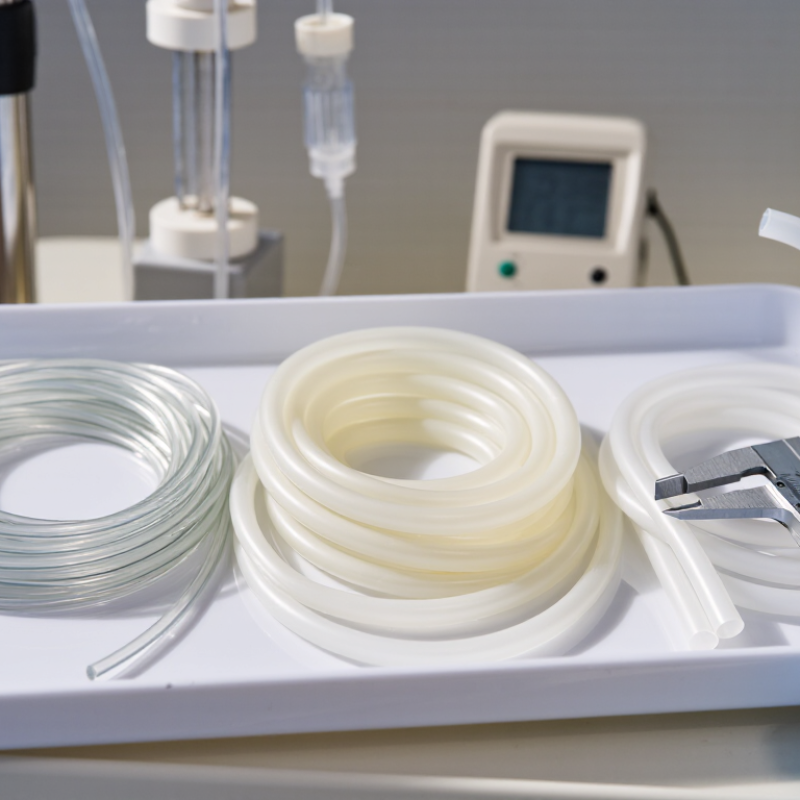
Why Are PVC Free Medical Tubes the New Industry Standard?

What PVC-Free Medical Tubes Are and How They Differ

PVC-free medical tubing is made without polyvinyl chloride in the tube material. It may use silicone, thermoplastic polyurethane, or other polymers, each with different handling characteristics. PVC tubing is often formulated with plasticizers to make it flexible; PVC-free designs avoid that specific material approach, but they are not necessarily additive-free. Check the product’s technical documentation.

The difference becomes clear at the bedside. A tube may feel softer in the hand, resist kinking differently, or offer a different level of clarity. These details can affect how easily staff inspect fluid flow or position a line. Small differences matter.

“PVC-free” does not automatically mean safer or better for every application. Compatibility with the intended fluid, connectors, sterilization method, and clinical use still needs verification. A material that performs well in one setup may be less suitable in another. It is easy to focus on the label and overlook the full assembly. That deserves a second look. Manufacturers should provide relevant material and performance data, while clinical teams assess the tubing within its actual use conditions.

Materials and Design Used in PVC-Free Tubing

PVC-free medical tubing is not one material with one performance profile. Designers commonly assess silicone, polyurethane, polyethylene, and thermoplastic elastomers for flexibility, clarity, chemical resistance, and intended contact time. The choice changes how a tube bends around a bed rail, holds its shape under suction, or connects to a luer fitting. Small details matter. Wall thickness, lumen smoothness, and kink radius affect flow and handling.

PlasticsEurope’s Plastics—the Fast Facts 2024 reports 413.8 million tonnes of plastics were produced worldwide in 2023.

That broad figure is not specific to medical tubing, but it underscores why material selection and waste planning deserve attention.

Material claims need testing. A PVC-free formulation may avoid PVC-associated plasticizers, but it is not automatically safer or suitable for every therapy. Manufacturers should evaluate biocompatibility, extractables, sterilization effects, and performance after storage. A tube that turns cloudy or stiff after sterilization can complicate visual inspection and setup. Compatibility must be checked.

WHO estimates that about 15% of healthcare waste is hazardous, though this includes many waste streams beyond tubing. That context makes disposal planning relevant, not a reason to assume one polymer is universally greener. The right design balances patient contact, reliable flow, connection fit, and the facility’s actual handling conditions.

There is no perfect material; trade-offs should be documented.

Benefits for Patients, Clinicians, and Healthcare Systems

Why Are PVC Free Medical Tubes the New Industry Standard?

For patients, tubing is easy to overlook, yet it can be part of a device used for hours. PVC-free options use other polymers, such as silicone or thermoplastic elastomers. Some formulations avoid plasticizers used in certain PVC products. That can matter. Still, “PVC-free” alone does not prove a tube is safer for every patient or use. Material composition, contact time, and clinical purpose all deserve review.

Clinicians need tubing that bends smoothly, stays connected, and allows fluids to move as intended. A tube that kinks during repositioning can interrupt care, while one that feels stiff may be harder to manage. PVC-free products vary in flexibility, clarity, and compatibility with medicines or cleaning methods. Staff should follow device instructions and local protocols, not rely on material labels alone. Small details matter.

Healthcare systems may benefit from clearer material choices and reduced concern about specific additives, depending on the product and application. Procurement teams also have to weigh supply consistency, durability, waste, and cost. A substitute that performs poorly can create extra handling or replacement work. That trade-off is not always obvious at purchase. Comparing validated performance data with feedback from clinicians can support better decisions, even when the evidence leaves room for questions.

Why Are PVC-Free Medical Tubes the New Industry Standard? — Benefits for Patients, Clinicians, and Healthcare Systems
Dimension PVC-Based Tubing: Key Consideration PVC-Free Tubing: Potential Benefit What Healthcare Teams Should Verify
Plasticizer exposure Some flexible PVC medical products use plasticizers, including DEHP. Exposure can occur when DEHP migrates from certain products into fluids or other contacting media. Many PVC-free formulations avoid DEHP because they do not use PVC as the base polymer. This can help reduce a specific source of exposure. Check the material and plasticizer declarations for the exact product. “PVC-free” does not by itself confirm that a product is free of all potentially concerning chemicals.
Patient populations Exposure considerations may be especially relevant when selecting products for patients who may receive substantial or repeated medical-device exposure. Provides an additional material option when a care team or facility seeks to limit exposure to DEHP from medical devices. Base product selection on the intended use, patient needs, applicable clinical guidance, and facility policy—not on material labels alone.
Clinical performance PVC tubing is used across many medical applications, and its performance depends on the particular formulation and device design. Alternative polymers can be designed for applications that require flexibility, fluid transfer, or other tubing functions. Confirm compatibility with the medication or fluid, flow requirements, connectors, sterilization method, and instructions for use. Alternatives are not automatically interchangeable.
Clinician workflow Changes in tubing material or product design can affect handling and connections, even when products serve similar purposes. A suitable alternative may support existing workflows when it meets the clinical and technical requirements of the application. Evaluate setup, connection security, visibility, kinking, and staff training before changing products or protocols.
Procurement and supply Material choice is one factor among availability, product range, regulatory status, and supply continuity. Including PVC-free options in procurement specifications can broaden choices for applications where those options are appropriate. Assess total cost, reliable supply, product-specific approvals, and equivalence for the intended use before standardizing a substitution.
Environmental considerations PVC-containing products can present end-of-life management challenges; disposal requirements depend on the product and local rules. Removing PVC may avoid some PVC-specific end-of-life concerns, but it does not establish that a product has a lower overall environmental impact. Compare life-cycle evidence, packaging, manufacturing, and disposal routes. Follow local healthcare-waste regulations and product instructions.
Standards and validation Safety and suitability depend on compliance with requirements for the specific medical device and its intended use. PVC-free products can offer another route to meeting application-specific material preferences and requirements. Review applicable regulatory clearances, biocompatibility information, performance testing, and manufacturer documentation for the specific device.
Important qualification PVC-free is a material description, not a guarantee of superior clinical performance, lower overall risk, or environmental benefit. The right tubing depends on the device, fluid, patient, and intended use.

Safety and Environmental Considerations

PVC-free medical tubing can reduce reliance on PVC and certain plasticizers, but “PVC-free” does not mean risk-free. Safety depends on the tube’s material, intended use, and contact with medicines or bodily fluids. A tube carrying a lipid solution may behave differently from one used for air. Review biocompatibility data, extractables and leachables information, and compatibility with the planned sterilization method. Check performance under real operating conditions, too: pressure, temperature, and repeated flexing all matter. Small details matter.

Environmental benefits also need careful evaluation. Some PVC-free materials may avoid particular additives, yet their production, transport, and disposal still have impacts. A durable tube that lasts through its intended use may reduce replacement waste, while a poorly matched material can fail early. Disposal routes vary by facility and region, so do not assume every alternative is recyclable or biodegradable. That claim needs evidence. Comparing materials across their full life cycle is more useful than relying on a label alone.

Tips: Ask suppliers for current technical documentation and test results. Confirm the tube works with the exact fluid, connectors, and sterilization process. Track leaks, discoloration, or stiffness during evaluation; these observations can reveal a mismatch before routine use. No material is perfect, and that is worth remembering.

Why Are PVC-Free Medical Tubes the New Industry Standard?

Safety and environmental considerations

PVC-free tubing does not contain PVC polymer, avoiding concerns associated with PVC and certain additives used in some formulations. “PVC-free” alone does not establish that a tube is safer or has a lower environmental impact; those depend on its specific materials, use, and disposal.

Medical Applications and Factors Driving Industry Adoption

PVC-free medical tubing is used in infusion sets, drainage lines, respiratory circuits, and peristaltic pump systems. Material choice depends on the task. Silicone can remain flexible in warm conditions, while thermoplastic elastomers may offer a familiar balance of softness and handling. Polyurethane is used where strength and a smaller tube profile matter. Each option behaves differently.

Fit matters. Clinicians need tubing that connects securely, stays kink-resistant, and allows fluids to move at a predictable rate. Clear walls can help staff spot air bubbles or changes in fluid color. In pump applications, even small differences in wall thickness and elasticity can affect flow. Manufacturers therefore test tubing with its intended connectors, devices, and sterilization method—not just as a loose length of material.

Adoption is also driven by product design and supply planning. Some healthcare teams seek alternatives to PVC plasticizers, while manufacturers may prefer materials that suit particular clinical workflows. But PVC-free does not automatically mean safer or better. The finished tube still needs careful evaluation for biocompatibility, extractables, flexibility, shelf life, and performance after sterilization. One detail is easy to overlook: a tube that feels excellent on the bench may kink once routed around a bedrail. Real-use testing matters. So does honest documentation of limits.

FAQS

What does “PVC-free” mean for medical tubing?

It means the tube material does not contain polyvinyl chloride. It does not mean the product contains no additives.

Which materials may be used instead of PVC?

Common options include silicone, polyurethane, polyethylene, and thermoplastic elastomers. Their flexibility, clarity, and chemical resistance can differ.

Does PVC-free tubing always feel softer?

No. Feel depends on the material, wall thickness, and design. Check how the tube bends around a bed rail.

Why should tubing be checked with the intended fluid?

Materials can behave differently with different fluids. Confirm compatibility with the exact solution, connectors, and intended use.

What performance details should be reviewed?

Review flow, kink resistance, connection fit, pressure limits, and clarity. A cloudy tube can make fluid inspection harder.

Does PVC-free automatically mean safer?

No. Review biocompatibility, extractables and leachables, and sterilization data. The label alone is not enough.

What can affect tubing performance after sterilization?

Sterilization and storage may change a tube’s clarity or stiffness. Check current test data and inspect samples after processing.

Is PVC-free tubing always better for the environment?

Not necessarily. Production, transport, durability, and disposal all matter. Recycling or biodegrading should not be assumed.

What signs could suggest a material mismatch?

Watch for leaks, discoloration, stiffness, or unexpected kinking during evaluation. Small details matter. Still, observations alone may not explain the cause.

Conclusion

Why are PVC-free medical tubes becoming the industry standard? These tubes are made without polyvinyl chloride, using alternatives such as silicone, polyurethane, or other medical-grade polymers. Their material and design can be selected to meet needs such as flexibility, transparency, durability, and compatibility with fluids or equipment. Depending on the material, they may also avoid certain plasticizers associated with some conventional PVC tubing.

For patients and clinicians, PVC-free options can support reliable care across applications such as infusion, respiratory support, and drainage, while giving healthcare systems more material choices. Safety still depends on appropriate testing, manufacturing quality, and suitability for each intended use; no single material is ideal for every application. Environmental considerations also matter, since impacts vary with production, use, and disposal. Growing attention to patient needs, material performance, and sustainability is encouraging adoption, making PVC-free tubing an increasingly important choice in modern healthcare.

Liam

Liam

Liam is a dedicated marketing professional with a profound expertise in the industry, where he excels at highlighting the unique advantages of our core products. With a keen understanding of market trends and consumer needs, Liam frequently updates our company’s professional blog, providing......